Skunk, Opossum and Armadillo Removal in Fort Worth
Three different animals, one recurring situation: something has moved in under a deck, a shed or a slab, or is turning your lawn over at night. The fix is the same in shape, and it is mostly about closing the space.
Which one do you have
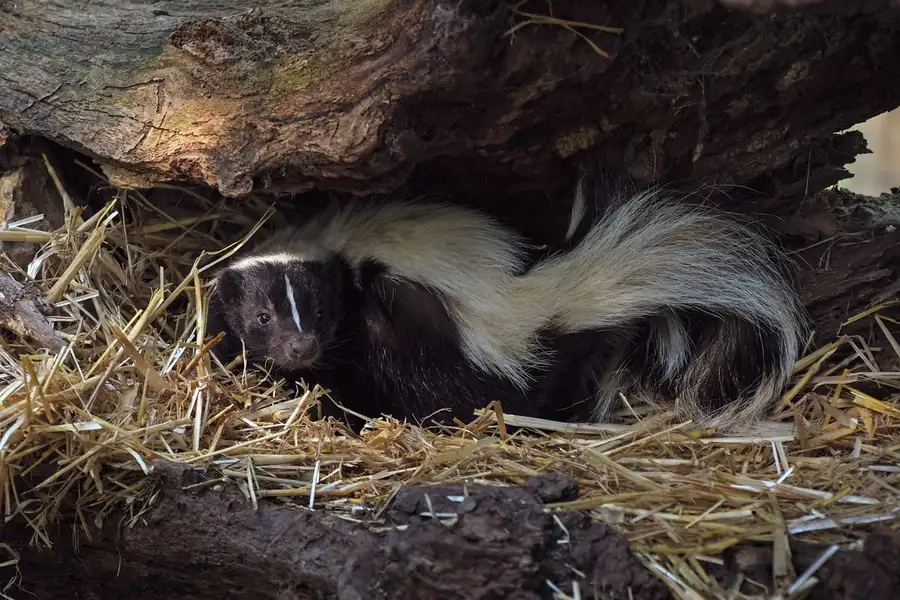
Skunk. You usually know. Beyond the obvious, look for a burrow entrance at the edge of a deck, a slab or a shed, and shallow cone-shaped divots in the lawn where it has been digging for grubs. Skunks are not aggressive and do not want a confrontation, but a dog that will not leave one alone tends to force the issue.
Opossum. Slow, grey, cat-sized, and far less trouble than its reputation. Opossums do not dig their own burrows; they take over whatever is already there. Signs are droppings, disturbed pet food, and something moving under the deck at night. If cornered they may hiss, bare their teeth, or go rigid, all of which is bluff. Opossum removal and trapping is the most common of the three calls we get from under a deck, and the easiest of the three to resolve.
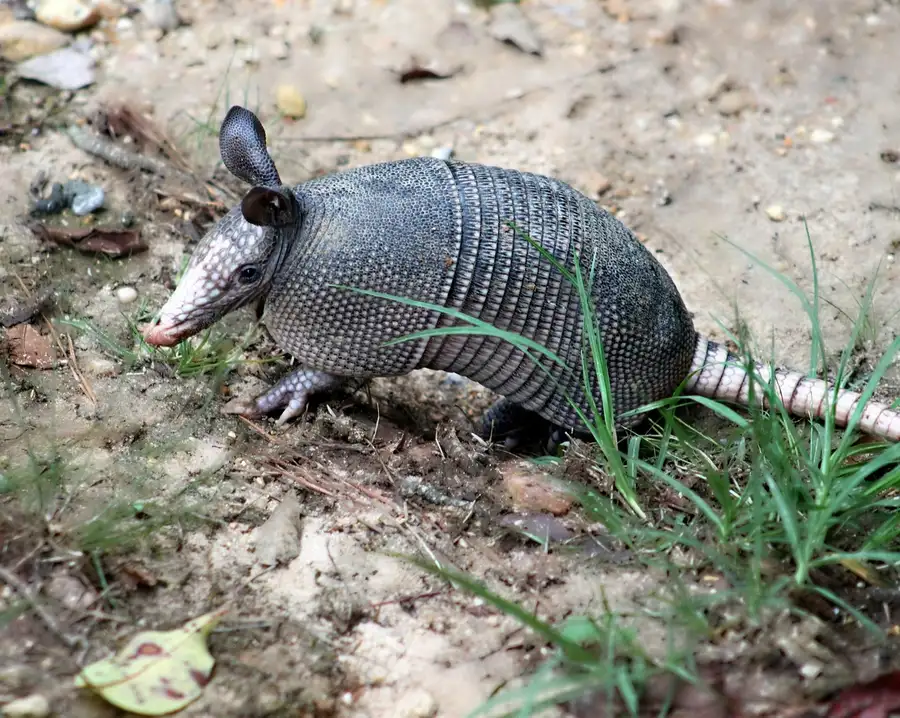
Armadillo. Unmistakable damage. Lines of small conical holes across a lawn, freshly rooted flower beds, and burrows with a distinctive rounded entrance, often against a foundation or under a slab. Armadillos are the most destructive of the three, and the damage arrives fast.
Why under-structure animals matter more than they look
The animal itself is usually the smaller half of the problem.
Burrowing against a foundation, under a slab or beside a driveway moves soil that was holding something up. Over a season that shows up as settlement, cracked concrete, or a deck post that is no longer sitting square. Armadillos in particular will excavate a surprising volume.
Under a shed or a deck, the same space then becomes attractive to the next animal, and to the one after that. An empty burrow is an advertisement.
Add the standard secondary issues: fleas and ticks carried in, pet conflicts, droppings, and in the case of skunks an odor problem that can persist in soil and under decking long after the animal has gone.
Call (571) 412-0006 and say what the animal is doing and where it is living.
Contact UsWhat Texas law says here
Skunks and opossums are fur-bearing animals under Texas Parks and Wildlife rules. Armadillos are classified separately, as nongame animals.
For the fur-bearers, Texas Parks and Wildlife states that landowners or their agents may take nuisance fur-bearing animals in any number, by any means, at any time, on that person's own land, without a hunting or trapping licence. The department attaches a condition: animals or pelts taken that way may not be retained or possessed, except by licensed trappers during the lawful open season and possession periods. Relocating one is a different matter again, and the department states that it requires prior authorisation plus permission from the owner of the release property, with a monthly report submitted.
For nongame animals, which includes armadillos, a hunting licence is required for take, there are no closed seasons or bag limits, and they may be taken at any time by lawful means on private property. Texas Parks and Wildlife also specifically makes it unlawful to possess armadillos for the purpose of sale.
The practical upshot is much the same as it is for raccoons. Relocation carries conditions rather than being available on request, so the durable answer is to make the space unavailable instead of removing tenants from it repeatedly. That is covered on wildlife exclusion. As elsewhere on this site, the above is a summary of what the department publishes and not legal advice.
How we handle it
Inspect. Find the burrow entrances, work out how many animals and whether young are present, and check for structural undermining while we are down there.
Remove. According to species and what the law allows, explained to you before we start.
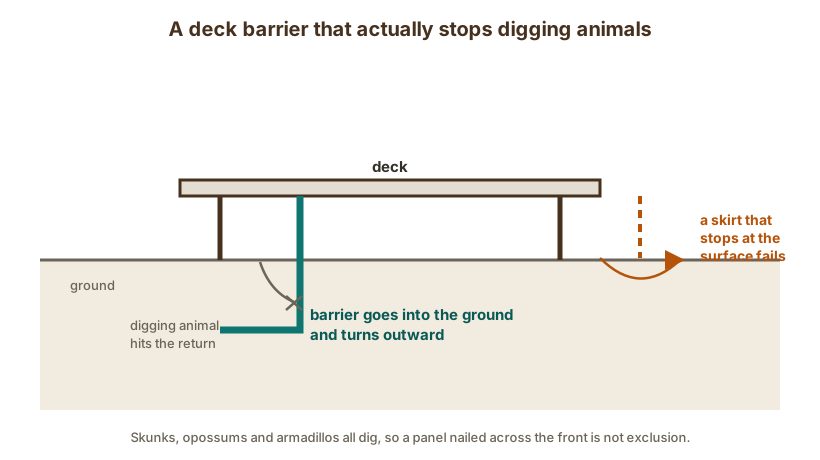
Close the space properly. This is the part that lasts. Under a deck or shed it means a barrier that goes into the ground and turns outward, not a panel nailed across the front, because every one of these animals digs. Rebuilding a skirt at ground level without a buried return is the most common way this gets done badly.
Deal with what is left. Backfilling and grading burrows, treating skunk odor in soil and under structures, and flagging any settlement worth a builder's eye.
Remove the reason. Grub-rich lawns draw skunks and armadillos, accessible pet food draws opossums, and dense cover at ground level helps all three.
What it costs
Cost is driven by how much barrier work is needed and how accessible the space is. Removing an opossum from an open crawlspace is a small job. Trenching and installing a proper buried barrier around a large deck is not, and it is also the thing that stops you paying for this again.
National cost guides put general wildlife removal at $250 to $450 with an average near $300 (Angi, March 2026; HomeAdvisor, June 2026), and Thumbtack's wider national spread at $310 to $986. Barrier installation is priced by the run and sits outside those figures.
We quote after looking. See what wildlife removal costs.
Get the space closed
Call (571) 412-0006. Tell us where the burrow is and what damage you are seeing. The contact form works too. Under-structure animals are one part of our wildlife removal in Fort Worth service.
Frequently Asked Questions
How do I get a skunk out from under my house?
Get it out first, then close the space with a barrier that goes into the ground and turns outward. Sealing the opening while the animal is still under there is the mistake that turns a nuisance into a dead-animal job.
Will it spray if you remove it?
Skunks spray as a last resort and give warning first. Careful, unhurried handling is most of what avoids it. We cannot promise it never happens, and anyone who promises that is overselling.
Can you relocate it instead?
Not as a simple on-request service. Texas Parks and Wildlife states that relocating a nuisance fur-bearer requires prior authorisation from the department plus the release-site owner's permission, with a monthly report. Making the space unavailable is the durable answer.
What is digging cone-shaped holes in my lawn?
Usually an armadillo or a skunk foraging for grubs. Armadillo damage tends to be more extensive and includes rooting in beds; skunk digging is typically shallower and more scattered.
Are opossums dangerous?
Generally no. They are slow, they avoid confrontation, and their alarming display is bluff. The real issues are droppings, parasites they carry in, and conflict with pets.