A Bat in the House: What to Do Right Now
A bat is flying around a room, or it was a minute ago and now you cannot see it. Here is the next ten minutes, in order, and then the one question that matters more than the bat.
Call (571) 412-0006 once the room is closed. Say the bat is inside the living space.
The next ten minutes
Close the room. Shut the interior doors so the bat is contained in one room, and get children and pets out of it. A bat that is contained settles; a bat being chased through a house does not.
Give it a way out. If you can do it safely, open a window or an exterior door in that room. The U.S. Fish and Wildlife Service describes this as the simplest method there is: open as many windows and doors to the outside as possible, and in the evening turn the indoor lights off so the bat can navigate its way out.
Leave it alone while it is flying. Do not swing a broom at it and do not try to catch it in the air. The Fish and Wildlife Service is blunt about this: bats are precision navigators hunting tiny insects at night, and they will avoid flying into you. Most bats that get a clear exit take it.
Keep it in sight if you can. From the doorway, not from the middle of the room. Knowing where it landed is the difference between a five-minute job and an evening spent searching.
Do not touch it. Not with bare hands, not with a towel, not with a cotton glove. That rule is the whole of the next section.
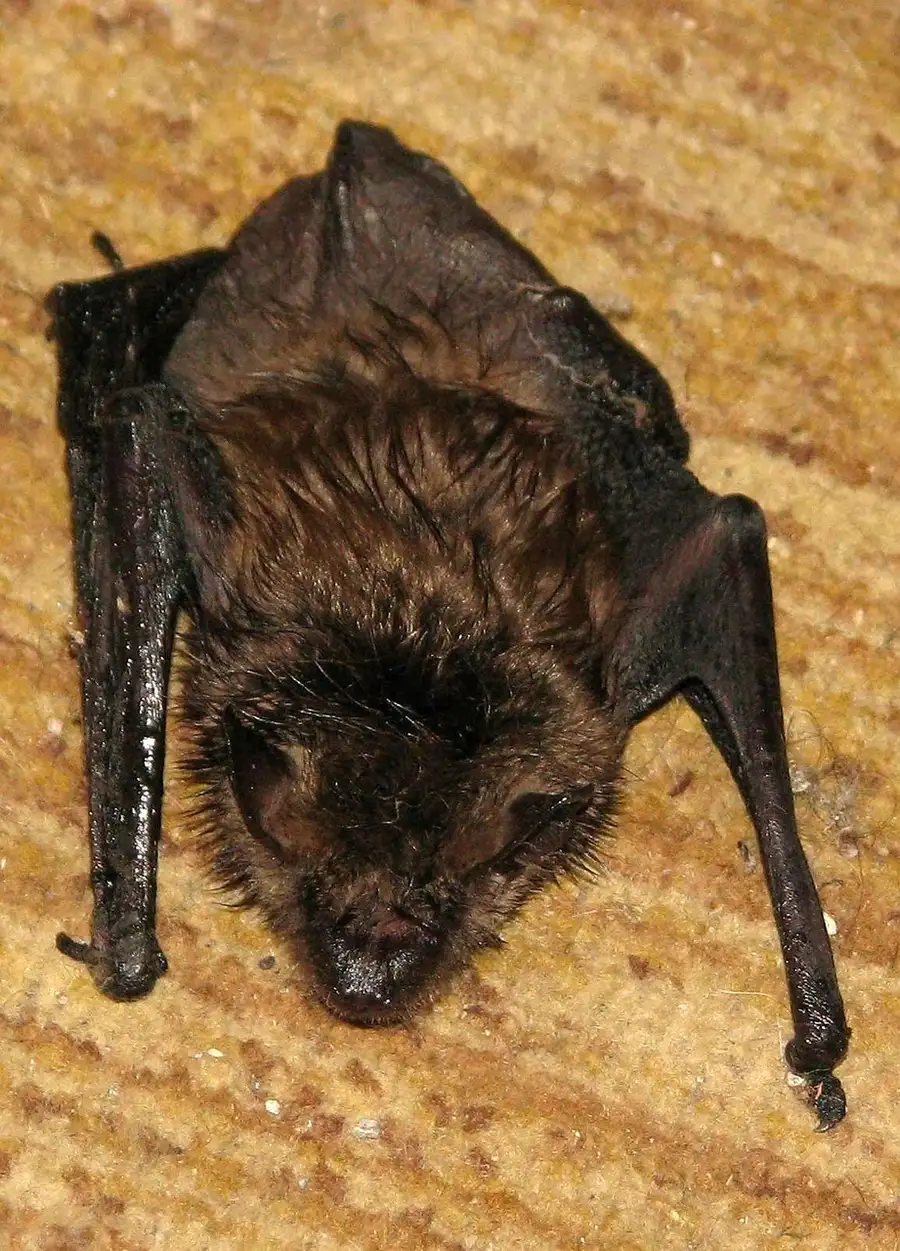
The exposure question comes before the bat
This is the part most pages bury, and it is the part that matters.
The CDC states that bat bites can be tiny and that you may not know you were bitten. It states that anyone who thinks they have been in contact with a bat should talk to their health department, and that if you find a bat in your home you should have it captured for rabies testing rather than released, and should not release it until you have spoken to a public health expert.
So before the bat goes anywhere, answer this honestly: could a person have been bitten, scratched or touched? In particular, was anyone asleep in the room the bat was in, is a child involved, or is there anyone who cannot say whether contact happened? If the answer to any of those is yes, or even maybe, the bat needs to be contained and kept, not let out of the window, and the health department is the first call. A healthcare professional decides whether treatment is needed. We do not, and neither does any wildlife company.
Texas Parks and Wildlife's own rule makes specific room for this situation: a bat may be transported for laboratory testing where there is a rabies concern. That is what happens to a bat that is kept for testing.
If nobody could have had contact, the bat can be given its exit or captured and released outside.
Call (571) 412-0006 once the room is closed. Say whether anyone could have been touched.
Contact UsIf the bat has disappeared
It has not left the house. It has landed somewhere high and out of sight: behind curtains, on top of a wardrobe, in a fold of fabric, behind a picture, in a gap at the ceiling line. Bats rest during the day and become active at dusk.
Keep the room closed. Check the high places with a torch, slowly. If you cannot find it, leave the door shut, the window open and the light off at dusk, and it will very likely leave on its own.
One caution, and it follows from the section above: if the bat cannot be found and someone was asleep in that room while it was loose, treat that as possible contact and talk to the health department. Not knowing is the reason the CDC's guidance is worded the way it is.
Capturing it, if you have to
If the bat has landed and needs to be kept for testing, or has settled somewhere it will not leave from, both the CDC and the Fish and Wildlife Service describe the same method.
Put on thick work gloves, leather or something equally strong. The Fish and Wildlife Service notes that bats can bite through one or two layers of cotton. Take a rigid container larger than the bat, a box or a large tub, and a piece of stiff card. Approach slowly, place the container over the bat, and slide the card underneath to close it. Tape the card in place. If the bat is being kept for testing, contact the health department for what happens next. If it is not, take it outside and release it by holding the container up and away from you; a bat needs height to take off and should not be put down on the ground.
If you are not comfortable doing any of that, do not. Keep the room closed and call.
Why it came in, and whether there are more
The Fish and Wildlife Service notes that bats often come in through a door left open on a summer evening, drawn by the insects that an outside light attracts. A single bat on a single night is usually that: a wrong turn.
A bat inside more than once is a different signal. It almost always means there is a roost somewhere in the same building, in the attic or a wall, and a gap between that space and where you live. Bats do not make holes; they use the ones that are there, and the CDC puts the size they can use at a quarter of an inch.
That is the point at which a bat in the house stops being a household job and becomes ours: finding the roost, closing the gap between the roost and the living space, and then excluding the colony properly. That work runs on Texas Parks and Wildlife's calendar. The department states that excluding bats from buildings is discouraged from May 1 to August 15, because the young cannot yet fly, so a roost found in June is inspected and planned then and sealed later. All of that is on bat removal in Fort Worth.

Who to call in Fort Worth
In order:
- Possible contact with a person: your health department, and then a healthcare professional. This comes first and it is not a wildlife question.
- An injured or grounded bat you want helped rather than removed: Texas Parks and Wildlife publishes a list of licensed wildlife rehabilitators by county, and the City of Fort Worth's number for wildlife rescue and rehabilitation questions is 817-392-1234.
- The bat itself, and the roost it came from: us, on (571) 412-0006. Fort Worth's Animal Care & Control does not trap wildlife or provide traps; the City's own guidance directs residents to search for animal rescue and removal services.
This page is a summary of published guidance from the CDC, the U.S. Fish and Wildlife Service and Texas Parks and Wildlife, and of our own practice. It is not medical advice and not legal advice.
Get the roost looked at
Call (571) 412-0006. Tell us whether the bat is still in the room, whether anyone could have been touched, and whether this has happened before. That last answer is the one that tells us whether we are looking for one bat or for a roost.
Frequently Asked Questions
Do I need a rabies shot if there was a bat in my house?
That is a question for a healthcare professional, not for us. The CDC states that bat bites can be tiny and go unnoticed, that anyone who may have been in contact with a bat should talk to their health department, and that a bat found in the home should be captured for testing rather than released. If someone was asleep in the room, or a child was involved, treat it as possible contact.
I saw a bat in my house and now I can't find it. What do I do?
Close the room, check the high places slowly with a torch, and if you cannot find it, leave the window open and the light off at dusk with the door shut. If anyone was asleep in that room while the bat was loose, talk to the health department.
Is it possible to have only one bat in the house?
Yes, and a single bat on a single night usually came in through an open door. A bat inside on more than one occasion usually means a roost in the building and a gap into the living space, which is a job for us.
Who do I call about a bat in my house in Fort Worth?
The health department if anyone may have been bitten, scratched or touched. Otherwise, us on (571) 412-0006. The City of Fort Worth does not trap wildlife, and its number for wildlife rescue questions is 817-392-1234.
Can I just let it out of the window?
If nobody could have had contact with it, yes: open the window, turn the light off, close the door. If contact is possible, the CDC's guidance is not to release it until you have spoken to a public health expert.